What to Do About a Contact Dermatitis Rash That Will Not Go Away
Clinical insight from Dr Sue-Ann Ho Ju Ee of Medical & Surgical Dermatology Clinic. Watch her full interview on FindClinic.sg

It often starts in the most ordinary way. A new perfume. A different laundry detergent. A pair of earrings you have worn before with no issue. Then, a few hours or a few days later, your skin reacts.
A patch of redness. An itch that will not settle. Skin that feels tight, hot, or strangely sensitive. You try to ignore it. You try a gentler moisturiser. You hope it will fade by morning.
But the rash stays. Sometimes it spreads. And the more you scratch, the worse it feels.
If this sounds familiar, you may be dealing with a contact dermatitis rash. It is one of the most common skin reactions seen in clinical dermatology, and yet it is often misunderstood, mistreated, or quietly endured for weeks before the right help is sought.
At Medical & Surgical Dermatology Clinic (MSDC) in Novena Medical Centre, Dr Sue-Ann Ho Ju Ee sees patients with persistent, unexplained rashes regularly, including those caused by contact dermatitis.
Hear Dr Sue-Ann Ho Ju Ee share her approach to diagnosing and treating complex skin conditions. Watch the full interview on FindClinic.sg.
What is contact dermatitis?
Contact dermatitis is a skin reaction that happens when your skin comes into contact with something it does not tolerate. The reaction may appear within minutes, hours, or even days after exposure.
It is generally divided into two types.
Irritant contact dermatitis is the more common form. It happens when something physically damages the skin barrier, such as harsh soaps, detergents, frequent hand washing, or chemical exposure. It often affects hands, especially in cleaners, healthcare workers, and anyone with frequent water exposure.
Allergic contact dermatitis happens when the immune system reacts to a specific substance. Common triggers include nickel (in jewellery, belts, and watches), fragrances, hair dye, rubber, and certain skincare ingredients. The reaction may not appear the first time you are exposed. It can develop after months or years of repeated contact.
What does a contact dermatitis rash look like?
A contact dermatitis rash typically appears in the area that touched the trigger. Common signs include:
Redness or pink discolouration on the affected area
Itching, which is often the first symptom
Dryness, flaking, or scaling
Small bumps or fluid-filled blisters in more severe cases
A burning or stinging sensation
Skin that feels thickened after weeks of repeated exposure
The shape of the rash can be a clue. A rash shaped like a watch strap or a necklace often points to nickel allergy. A rash on the eyelids may come from skincare, makeup, or even nail polish transferred by touching the face.

Contact dermatitis on the face and other common areas
While hands are the most common site, contact dermatitis can appear almost anywhere.
On the face, triggers often include skincare, makeup, fragrance, hair products, or sunscreen
On the eyelids, the skin is thin and especially reactive
On the lips, lipstick, toothpaste, and lip balm can be culprits
On the neck and chest, perfume and necklaces are common triggers
On the scalp, hair dye and certain shampoos may be involved
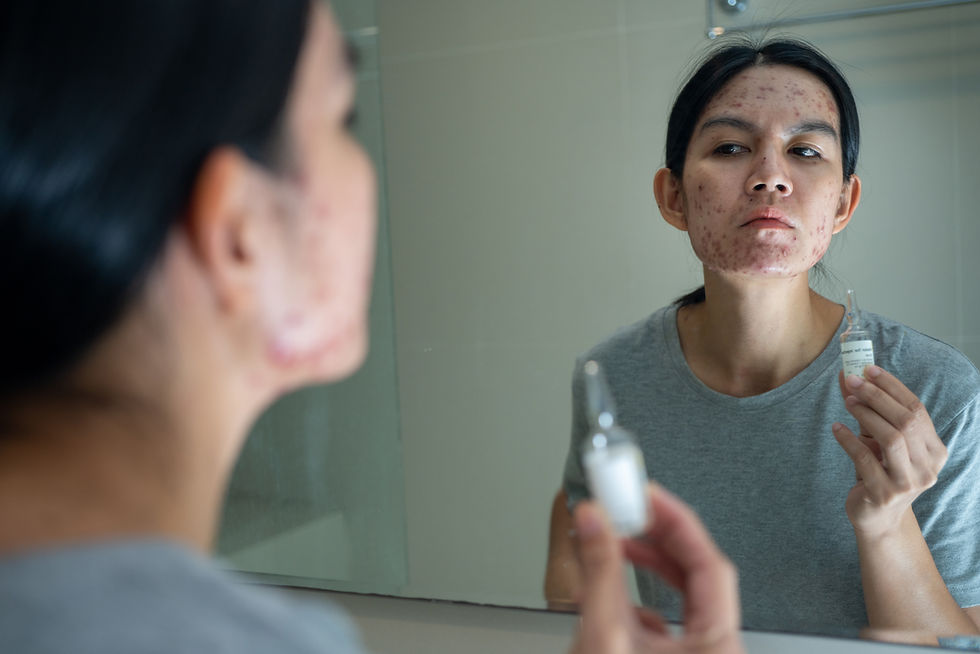
A rash on the face is particularly distressing because it is visible and often misinterpreted as acne, rosacea, or eczema. This is why proper assessment matters.
What healing usually looks like
When the trigger is removed and proper care begins, healing generally follows a recognisable pattern, though the experience can vary considerably from person to person.
Most patients first notice that the redness and itching gradually settle as the skin's reaction calms. Inflammation eases. The skin may then go through a phase of dryness or peeling as it regenerates. Eventually, skin texture and colour return closer to normal.
How quickly this happens depends on several factors, including the severity of the reaction, the area affected, the type of trigger, and whether the trigger has truly been avoided. Some patients recover within a couple of weeks, while others may need longer. Pigmentation changes can sometimes linger for longer in Asian and deeper skin tones.
If healing is slower than expected, or if the rash returns, a dermatological assessment can help identify what else may be going on.
How contact dermatitis is treated
Treatment depends on the severity and the suspected trigger. A dermatologist may recommend:
Identifying and avoiding the trigger, which is the most important step
Topical corticosteroids to reduce inflammation
Gentle, fragrance-free moisturisers to restore the skin barrier
Cool compresses for symptom relief
Oral medications in more severe cases
Patch testing to identify the specific allergen, especially when the cause is unclear
At MSDC, patch testing is offered as part of allergy diagnostics. It involves applying small amounts of common allergens to the skin under controlled conditions, helping identify what your skin is genuinely reacting to.
When to see a dermatologist for a rash
You may want to consider a consultation if:
The rash has lasted longer than expected despite avoiding suspected triggers
It keeps coming back without a clear cause
It is spreading, painful, or interfering with daily life
It affects the face, eyelids, or sensitive areas
Over-the-counter creams are not helping
You suspect an allergy but cannot identify the source
A proper dermatological assessment can help distinguish contact dermatitis from other rashes and guide more effective treatment.
Frequently Asked Questions
How long does contact dermatitis take to heal? Recovery timing varies widely depending on the severity of the reaction, the area affected, and whether the trigger has been fully avoided. Some patients recover within a couple of weeks, while more severe or chronic cases may take longer and benefit from medical treatment.
Is contact dermatitis contagious? No. Contact dermatitis is a reaction to something your skin touched, not an infection. It cannot be passed to others.
Can contact dermatitis go away on its own? Mild cases may settle once the trigger is removed. However, persistent or worsening rashes generally need proper assessment and may require medical treatment.
What causes sudden itchy red patches on the skin? Sudden red itchy patches can have several causes, including contact dermatitis, allergic reactions, eczema, hives, or infections. A dermatologist can help identify the specific cause.
How do I know if my skincare is causing the rash? If a rash appears in the area where a product is applied and improves when you stop using it, contact dermatitis from skincare is possible. Patch testing can help confirm the specific ingredient involved.
Can contact dermatitis affect nails or lips? Yes. Nail products, lipsticks, lip balms, and toothpaste can all trigger localised contact dermatitis. These reactions are sometimes overlooked because they appear in less expected places.
Meet Dr Sue-Ann Ho
A rash that will not settle deserves more than guesswork. Identifying the cause is often the most important step toward lasting relief.
Dr Sue-Ann Ho Ju Ee is a dermatologist and Medical Director at Medical & Surgical Dermatology Clinic (MSDC) in Novena Medical Centre. With qualifications including MBBS (Singapore), MRCP (UK), and FAMS (Dermatology), and more than 18 years of experience, she sees patients across a wide range of skin conditions, including contact dermatitis and complex rashes that require careful diagnosis.
Dr Sue-Ann is also featured on FindClinic.sg, Singapore's healthcare editorial discovery platform that connects patients with verified specialist doctors through profiles, articles, and video interviews.
You can:
Read Dr Sue-Ann Ho's full profile and video interview on FindClinic.sg
Learn more about FindClinic.sg, Singapore’s healthcare editorial discovery platform.
When you are ready
A consultation is a conversation. You bring your rash, your questions, and your history. Dr Sue-Ann brings the time and experience to help you understand what is happening and what can be done about it.
To book a consultation with Dr Sue-Ann at Medical & Surgical Dermatology Clinic, call +65 8339 2493 or fill in the booking form.