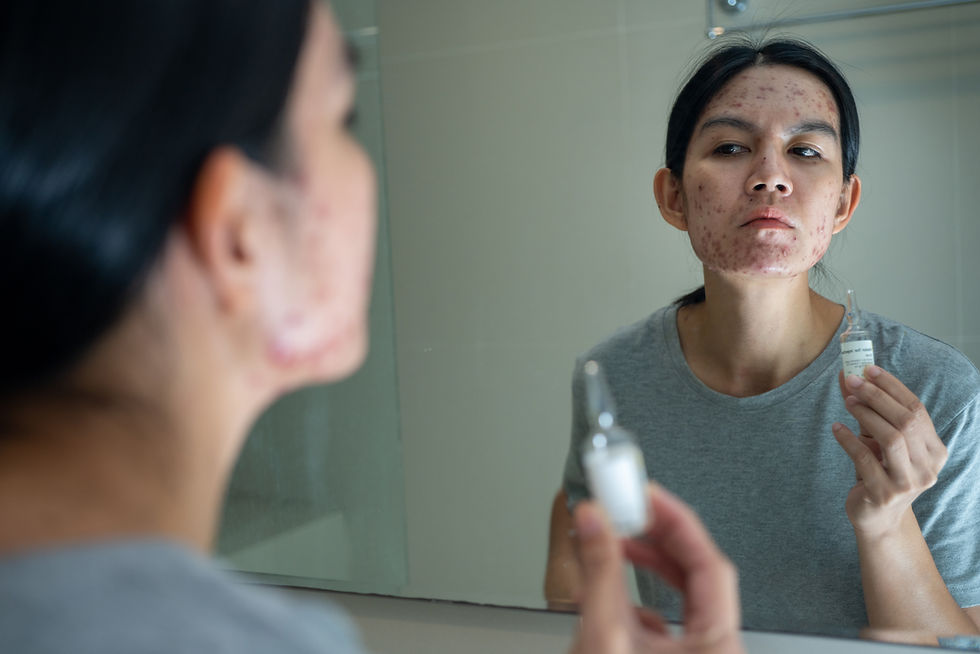
Noticing Dark Spots Without a Clear Reason? What Could Be Causing Them

You look at your face or your arms, your hands, your shoulders and there they are. Dark spots that seem to have appeared out of nowhere. There was no injury you can recall. No significant rash. No obvious event that might explain them. Just spots that, one day, you simply noticed.
It can feel unsettling, particularly when there is no clear explanation. You might find yourself wondering whether they were always there, or whether they appeared recently. Whether they are a sign of something, or simply the result of getting older.
You are far from alone in this. Dark spots are among the most common skin concerns, and in many cases, the cause is more mundane than it might seem. But that does not mean they are not worth understanding or, in some cases, having properly assessed.
At the Medical & Surgical Dermatology Clinic, individuals come forward with concerns about dark spots and undergo assessment as part of a comprehensive dermatology evaluation. Located at Novena Medical Center, the clinic supports patients across Singapore with a wide range of pigmentation and skin tone concerns.
What Are Dark Spots and How Do They Form?
Dark spots are areas of skin where melanin, the pigment that gives skin its colour, has been produced in greater quantities than in the surrounding skin. The result is a patch or spot that appears noticeably darker than the baseline skin tone.
There are several distinct types of dark spots, each with a different underlying cause:
Solar lentigines: Commonly known as age spots or sun spots, these are flat, well-defined darker patches that develop as a result of cumulative UV exposure over time. They are most common on sun-exposed areas such as the face, hands, and forearms.
Post-inflammatory hyperpigmentation (PIH): Darker marks left behind after the skin has experienced inflammation such as from acne, a minor injury, or an insect bite. These are particularly common in people with medium to deep skin tones.
Melasma: A form of pigmentation strongly associated with hormonal changes and sun exposure. It typically presents as larger, blotchier patches rather than discrete spots, and is most often seen on the face.
Understanding which type of dark spot you are dealing with matters, because the cause informs both the likelihood of change over time and the approach to assessment.
Sun Exposure as a Leading Cause of Dark Spots
In Singapore, UV exposure is a year-round reality. Unlike countries with defined seasons, Singapore's proximity to the equator means that UV radiation remains consistently high throughout the year including on overcast days, when UV rays still penetrate through cloud cover.
Cumulative UV exposure built up over months and years of daily life outdoors is one of the most significant drivers of dark spots. It stimulates melanocytes to produce more melanin, and over time, these areas of excess pigment can consolidate into visible spots.
Many people are surprised to discover that spots they attribute to aging are in fact the result of UV exposure accumulated across years. The face, hands, and forearms areas that are most consistently exposed are typically the first to show these changes.
Less Obvious Causes of Dark Spots
Not all dark spots are the result of sun exposure. A number of less obvious triggers can lead to spots appearing without any clear or immediate cause:
Post-inflammatory hyperpigmentation from healed acne: Even mild acne that has resolved can leave behind darker marks. These spots may appear weeks after the original breakout, which can make the connection easy to overlook.
Hormonal changes: Fluctuations in oestrogen and progesterone whether from pregnancy, oral contraceptive use, or hormonal shifts during perimenopause can increase melanocyte activity and lead to new pigmentation appearing on the face and body.
Certain medications: Some medications, including certain antibiotics, antimalarials, and chemotherapy agents, can cause drug-induced pigmentation. If dark spots appeared around the time a medication was started, this is worth noting.
Friction or irritation: Repeated friction against skin from clothing, accessories, or habitual touching can trigger localised melanin production. Areas such as the neck, underarms, and inner thighs are particularly susceptible.
Why Dark Spots Can Appear Suddenly
One of the more puzzling aspects of dark spots is how suddenly they can seem to appear. You may not have noticed any preceding skin change, yet seemingly overnight, a spot is there.
In reality, dark spots rarely develop overnight. What is more common is that melanocyte activity has been quietly building over time triggered by cumulative UV exposure, low-grade inflammation, or ongoing hormonal influence until the pigment becomes concentrated enough to be visible. The 'sudden' appearance is often the point at which the pigment crosses the threshold of what the eye can detect.
Mild, repeated stimuli such as the daily Singapore sun on a commute, or a recurring habit of touching a particular area of the face can be enough to trigger gradual melanin accumulation without any single obvious event.
When Dark Spots Need Professional Assessment
Most dark spots are benign, but there are certain features that make professional assessment worthwhile. It is advisable to have a spot reviewed if you notice any of the following:
A spot that is growing in size or spreading at its edges
A change in colour within a spot, particularly if it becomes multi-tonal
An irregular or uneven border that was not previously present
A spot that bleeds, crusts, or becomes raised without an obvious explanation
A spot that looks noticeably different from others on your skin
The general principle is that stable, unchanged spots are less concerning than those that are evolving. If you are uncertain whether a spot has changed, comparing recent photographs with older ones can be a helpful reference point.
How Dark Spots Are Generally Assessed
When a dermatologist assesses a dark spot, they are looking to understand its type, depth, and any features that might indicate it warrants further attention. The assessment typically involves a clinical history including when you first noticed the spot, whether it has changed, and relevant personal and family history followed by a skin examination.
Dermoscopy, a non-invasive technique that uses magnification and polarised light to examine the skin in detail, is commonly used to assess pigmented lesions. It allows the clinician to look at features of the spot that are not visible to the naked eye, which helps distinguish between different types of pigmentation and identify any features that might require further investigation.
Skin type is also taken into consideration, as people with deeper skin tones are more prone to certain types of pigmentation and may require a different approach to both assessment and management.
A Reassuring Perspective
Finding dark spots on your skin can feel worrying, particularly when you cannot identify a cause. But the vast majority of dark spots are the result of common, well-understood processes such as cumulative sun exposure, post-inflammatory changes, or hormonal shifts rather than anything sinister.
Understanding what might be behind them is genuinely useful. It helps you make sense of what you are seeing, gives you context for how the spots might behave over time, and allows you to make informed decisions about whether and how to address them.
Dark spots are one of the most common skin concerns encountered in dermatology, and there is a great deal that can be understood about them through a straightforward clinical assessment.
Take the Next Step
If you are noticing dark spots in Singapore, it may be helpful to seek a professional assessment rather than continuing to monitor the condition on your own.
At Medical & Surgical Dermatology Clinic, Dr Sue-Ann Ho Ju Ee takes a personalised approach to each consultation, focusing on understanding your concerns and identifying possible causes of your dark spots.
Located at Novena Medical Center, the clinic supports individuals across Singapore with comprehensive dermatology care for a wide range of pigmentation and skin concerns.
Arranging a consultation can help you gain clarity on your skin and better understand the next steps for your skin health.