Why Skin Tone Changes Differ Across Different Areas of Your Face and Body

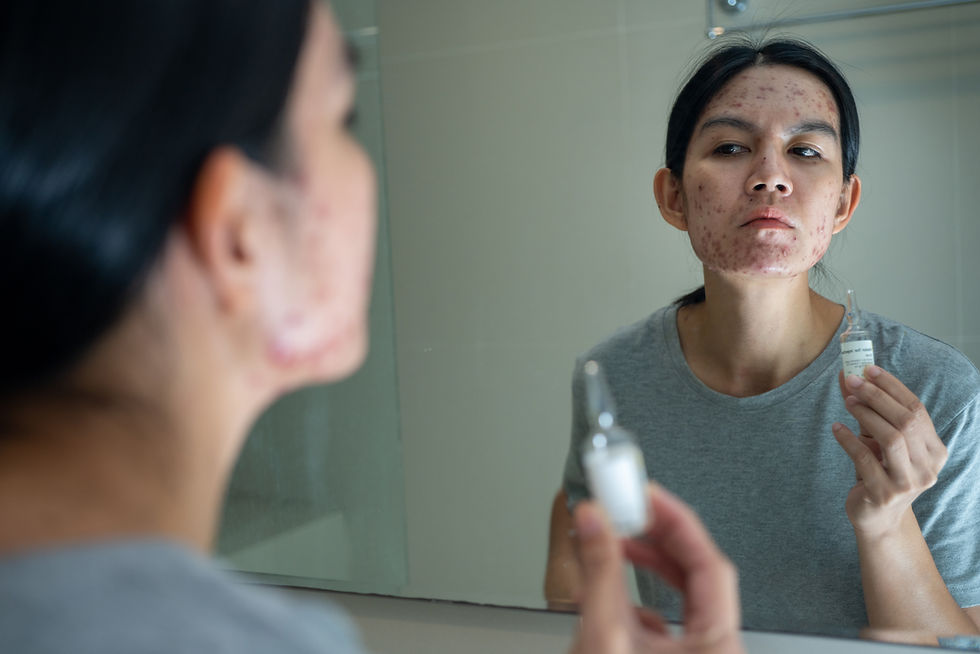
You stand in front of the mirror and something catches your eye. The skin on your cheeks looks different from your forehead. Your neck seems a shade darker than your chest. Your knuckles, elbows, or the sides of your face appear uneven, not quite matching the rest of you. It is the kind of thing that is easy to dismiss at first, but once you notice it, it is hard to stop noticing.
It can feel confusing, especially when you have not had any obvious injury, rash, or illness. Skin is supposed to look like skin so why does it look different in different places?
You are not imagining it, and you are certainly not alone. Uneven skin tone is one of the most common concerns people notice about their skin, and it has a number of well-understood causes, many of which are entirely related to how skin naturally behaves across different parts of the body.
At Medical & Surgical Dermatology Clinic, individuals come forward with concerns about uneven skin tone and undergo assessment as part of a comprehensive dermatology evaluation. Located at Novena Medical Center, the clinic supports patients across Singapore with a wide range of pigmentation and skin tone concerns.
How Skin Tone Is Determined
Skin tone is primarily determined by melanin, a pigment produced by specialised cells called melanocytes. These cells are found in the base layer of your skin and produce melanin in response to various stimuli, including UV exposure, hormonal signals, and inflammation.
What many people do not realise is that melanocyte activity is not uniform across the body. Different areas of skin have different baseline melanin levels, different rates of cell turnover, and different sensitivities to the factors that trigger pigment production. This means that two areas of your skin can respond very differently to the same stimulus whether that is sunlight, friction, or a hormonal shift.
Your natural skin type also plays a role. Those with deeper skin tones tend to have more active melanocytes, which can mean more pronounced and longer-lasting changes when pigment is triggered.
Why Sun Exposure Affects Skin Tone Differently in Different Areas
Singapore's UV index is consistently high throughout the year, often reaching levels classified as 'very high' or 'extreme' during midday hours. Over time, this cumulative UV exposure has a significant effect on skin tone but it does not affect all areas equally.
Areas that receive direct, repeated sun exposure to the face, neck, forearms, and hands tend to darken more noticeably than areas that are usually covered. But even within the face, distribution can be uneven. The tops of the cheeks, the bridge of the nose, and the upper lip are often more affected than the inner cheeks or jawline, simply because of how light falls across the face.
Over years of living in Singapore's sunny climate, these differences can become increasingly visible. What starts as a subtle variation in tone can gradually become a more defined unevenness particularly in people who spend time outdoors or near windows without consistent sun protection.
How Hormonal Changes Influence Skin Tone
Hormonal fluctuations are one of the most significant and least visible drivers of uneven skin tone. Oestrogen and progesterone can stimulate melanocytes, which is why skin tone changes are common during pregnancy, when starting or stopping oral contraceptive pills, or during perimenopause.
The most recognisable pattern is melasma: a form of pigmentation that typically appears on the cheeks, upper lip, forehead, and chin. It tends to be symmetrical and follows a characteristic distribution linked to hormonal influence combined with UV exposure. Melasma is more common in women, though it can occur in men as well.
What makes hormonal pigmentation particularly noticeable is that it tends to appear in concentrated patches often on the face while the rest of the body remains unaffected. This contrast can make the unevenness feel more pronounced.
Other Common Causes of Uneven Skin Tone
Beyond sun exposure and hormones, a number of other factors can contribute to differences in skin tone across different areas:
Post-inflammatory hyperpigmentation (PIH): When skin experiences inflammation from acne, a rash, an insect bite, or even minor skin irritation it can leave behind a darker mark as it heals. These marks often appear on the face or body in the exact location where the original skin concern was.
Friction-prone areas: The knees, elbows, underarms, and inner thighs are areas where skin experiences repeated friction and pressure. Over time, this mechanical stimulation can trigger melanocyte activity, leading to gradual darkening.
Scarring: Healed wounds and surgical scars can sometimes result in either hyperpigmentation (darker tone) or hypopigmentation (lighter tone), depending on how the skin repairs itself.
Dry or compromised skin barrier: Areas where the skin barrier is frequently disrupted such as around the mouth or on the hands may show more variation in tone over time.
Why Some Areas Retain Colour Changes Longer
Not all skin behaves the same way when it comes to fading. Pigment that sits in the upper layer of the skin the epidermis tends to fade more quickly as the skin naturally sheds and renews itself. Pigment that has settled into deeper layers of the skin, known as dermal pigmentation, is far more persistent and can take considerably longer to lighten.
Skin turnover rate also varies by body area. Facial skin renews relatively quickly compared to skin on the legs or back. This means that a dark spot on the face may fade faster than a similarly sized mark on the lower leg, even if both were caused by the same type of trigger.
Additionally, areas that continue to receive the same stimulus sun exposure, friction, or hormonal influence will keep producing melanin, which is why some areas seem to hold onto their colour changes indefinitely without any intervention.
When Uneven Skin Tone Warrants a Dermatology Review
Many changes in skin tone are benign and stable, but there are situations where a professional assessment is worthwhile. It is a good idea to seek a review if you notice:
A new patch of uneven skin tone that has appeared without an obvious cause
A pigmented area that is growing, changing shape, or developing an irregular border
A mole or flat lesion that is changing in colour, becoming multi-tonal, or developing new features
Skin tone changes that are accompanied by itching, soreness, or texture changes
Pigmentation that has not improved after several months, or appears to be spreading
Changes that evolve over time rather than remaining stable are generally worth having assessed, as they allow a dermatologist to determine whether what you are seeing is a common pigmentation concern or something that warrants closer attention.
A Reassuring Perspective
It is completely natural for skin tone to vary across different areas of your body. Skin is not a uniform surface; it responds dynamically to your environment, your lifestyle, and your biology. The fact that different areas look slightly different is a reflection of how your skin has adapted over time, not necessarily a sign that something is wrong.
For many people, understanding what is causing the unevenness is the most helpful first step. It allows you to make sense of what you are seeing and, if relevant, to take steps that support a more even skin tone going forward.
Uneven skin tone is one of the more commonly encountered concerns in dermatology, and having a clear picture of what is driving it is a useful starting point for understanding how to approach it.
Take the Next Step
If you are noticing uneven skin tone in Singapore, it may be helpful to seek a professional assessment rather than continuing to monitor the condition on your own.
At Medical & Surgical Dermatology Clinic, Dr Sue-Ann Ho Ju Ee takes a personalised approach to each consultation, focusing on understanding your concerns and identifying possible causes of your skin tone changes.
Located at Novena Medical Center, the clinic supports individuals across Singapore with comprehensive dermatology care for a wide range of pigmentation and skin tone conditions.
Arranging a consultation can help you gain clarity on your skin and better understand the next steps for your skin health.